Showing posts with label CULTURE. Show all posts

Friday, 22 October 2010

Quality of Life Improvement 30: A tour of the Lāʻie Hawaiʻi Temple of The Church of Jesus Christ of Latter-day Saints (LDS Church)


Hawaiʻi's Taj Mahal, the Mormon (LDS Church) temple in Lāʻie, will be open to the general public for three weeks starting Friday, 22 October, 2010.

The temple is noteworthy in that it was the first Mormon temple erected outside of Utah, being first dedicated on 27 November, 1919, but to those familiar with the religion's history, this shouldn't be surprising.


To make a very long, outlandish story shorter, the Mormon narrative sharply diverges from Christianity in the belief that, sometime around 600 BCE, a group of Israelites sailed to the Western Hemisphere and established themselves somewhere in the Americas. These Israelites ultimately splintered into factions, principally: the fair-skinned and righteous, the Nephites; and the swarthy, wicked Lamanites. Eventually, Jesus dropped by the Americas after his resurrection and imparted His religion, all peoples were united, and peace reigned for 84 years in the hemisphere.

Then, slowly at first, Lamanite darkies started to fall away from Christ's faith, abandoning themselves to wickedness and sin. After ca 230 CE, war erupted between the Nephites and the numerically-greater Lamanites until, finally, in a series of wars from 236 to ca 400 CE, the "true believers in Christ," the Nephite nation, were completely liquidated.

Importantly, though, before the Nephites were utterly destroyed, their two final prophets and military commanders, Mormon and his son Moroni, transcribed the history of their people and of their religion on tablets that are now knowns as the "Golden Plates." Moroni, in anticipation of his death at the hands of Lamanites, buried the plates in what is now Wayne County, in New York state, whereafter Moroni, the last Nephite, was killed.


On September 21, 1823, the resurrected Moroni appeared to Joseph Smith, Jr., and commanded him to first retrieve the Golden Plates from the Hill Cumorah and then to translate the plates into English, so that God's true religion could be once again known to the world. Joseph Smith did just as he was instructed, translating the plates from an unknown script called "reformed Egyptian" to English using at lease two seer stones (rocks, basically). Smith would carefully place the seer stones, known as the Urim and Thummim, in the bottom of his inverted top hat. The Urim and Thummim (plus top hat) would act as miraculous translating goggles, and it was in this manner that Joseph Smith translated the Golden Plates, a work that we now call The Book of Mormon.

This shameless conman and his misogynist cronies were driven out of New York and Ohio and Missouri and Illinois before they walked across the Great Plains to Utah, at that time not fully under the direct control of the United States government, which they dubbed the State of Deseret. The settlers quickly got themselves into trouble with the United States government, famously when they butchered an entire wagon-train of settlers bound for California, the so-called Mountain Meadows Massacre of 11 September, 1857.

With the word out in the United States that Mormons were, at best, a band of polygamist heathens, the nascent church met with little success in its efforts to attract converts. It was decided that the best course of action was to direct the missionaries to England and Scandinavia, not least because, as populations, they were the whitest, blondest and therefore most righteous. Surprisingly, the church succeeded in attracting converts, and, importantly, settlers, nearly all of whom quickly departed for Mormon colonies in the State of Deseret.

At around the same time, the Latter-day Saints sent their first contingent of missionaries to the Sandwich Islands, arriving on December 12, 1850, in Honolulu Harbor. The day following their arrival, the missionaries climbed a hill above Honolulu (Pacific Heights) and constructed the first (albeit crude) Mormon place of worship in Hawaiʻi and prayed. From then on, the church has enjoyed unusual popularity, not only in Hawaiʻi, but across Polynesia.


This popularity isn't completely unwarranted. Though the position has changed, originally, Mormons considered Polynesians to be the forgotten remnants of sainted, Nephite ancestors, and they largely treated them admirably, at a time when purported Christians were shamelessly exploiting Hawaiians (Jack London remarked at the time that "It comes with rather a shock to learn that in Hawaii the obscure, martyrdom-seeking missionary sits at the head of the table of the moneyed aristocracy.") and even stealing their entire country. In addition, the Mormon emphasis on hearth and home must have resonated with the culture-shocked Hawaiians, who loved their extended families and were reeling from demographic decimation and cultural collapse. It's our suspicion, also, that Mormonism represented the "Other" in the minds of both Hawaiians and Haoles of the late 19th century; If Anglicanism was a slap in the face to the children of the Calvinist missionaries, Mormonism was a dead fish wrapped in newspaper on their front lanai.


The Church of Jesus Christ of Latter-day Saints centered their colony in Hawaiʻi in the Koʻolauloa district of Oʻahu, at the ancient place of refuge in that district, Puʻuhonua o Lāʻie. The colony prospered, so much so that by the turn of the 20th century a temple was considered justified.


Mormon temples are quite different than meeting houses. The latter are simply the weekly places of worship, similar to regular Christian churches, and all, members and non-members, are welcome to attend. Temples, though, are the holiest of holies in Mormonism, and not only must one be a Mormon to enter, but that Mormon must be in good standing in the church, pass an interview with their bishop and receive something called a "temple recommend," all just to gain entry to the temple.


That's why we read with such interest when the First Presidency of the Church announced a public open house at the Lāʻie Hawaiʻi Temple. This three-week period is a rare chance to enter the temple—something that many church members never get to do.

The open house and the tours that accompany it are possible now because the church has not yet re-dedicated the temple after its recent renovation. Since the temple was completed and dedicated in 1919, it has only been open for tours once before, in 1978 when it was similarly reopened after renovation.


This is the public's opportunity to see for themselves whether Mormon temples are repositories for cryopreserved cadavers (we've heard the names Walt Disney and Howard Hughes mentioned) or immense caches of Pepsi (caffeine-free, we assume) and AK-47s; or whether there is evidence of animal-sacrifice or Masonic rites; or whether members of the church really wear green aprons and confectioner's hats and give secret handshakes while in the temple (we're not telling).


We suggest that you make your reservation and an excursion to Lāʻie. We predict that it will be nothing if not a memorable experience, whether you simply learn the rather banal truth, as we see it, that Mormonism is just plain mass-delusion and groupthink with genuinely friendly people, or whether you only relish in the sight of the spectacularly white temple—itself a "pearl of great price"—standing out against the extravagant black-green of the Koʻolau.


The Lāʻie Hawaiʻi Temple of The Church of Jesus Christ of Latter-day Saints (LDS Church) is located at 55-600 Naniloa Loop, Lāʻie 96762-1299, Hawaiʻi, adjacent to Brigham Young University—Hawaiʻi.

For Lāʻie Hawaiʻi Temple Open House Reservations, visit http://lds.org/reservations/ 

Friday, 15 October 2010

Quality of Life Improvement 29: Anatomy of a Tulip (2010)


The closest that we've ever come to affection for corporate America came in the early-1990s, courtesy of (yes, shockingly, we know) United Airlines.

Hong Kong's airport was still the storied Kai Tak (啟德機場) in those long-gone days. The airport's single runway had been carefully inserted on a tiny sliver of land between Hong Kong's mountains and harbor. Owing to the surrounding topography, pilots landing at Kai Tak would descend over Hong Kong, Victoria Harbour and Western Kowloon, passing over the beacon on Lion Rock while executing a tricky, tight 47° final turn, at low altitude, to (hopefully) line up with the airport's runway.


photo © Phil Wells

For any lucky enough to remember, the sight was spectacular—particularly on days with low cloud clogging the mountains. On those days, the scream of engines would be heard, but nothing would be seen. Then, almost instantaneously a 747 would emerge from the murk in a steep bank.

We remember a searing, sappingly hot and humid day in the summer of 1994. While absorbed in some forgotten banality, we heard the familiar sound of approaching engines, and looked around for the horizon, but saw nothing but block after grimy block of flats. Resigned to seeing nothing but laundry fluttering from open windows, we looked upwards again when the sound of the approaching aircraft became even louder and more piercing.


Then there, through the whites hanging on lines, was a United Airlines 747. For a short second after seeing that flash of red, white and blue, something felt familiar. It was as though we had seen a handsome, familiar face among the rows of hanging ducks that lined the streets of Hong Kong. Maybe we heard the last few bars of Rhapsody in Blue and thought of the shiny, muscular United States. Maybe we saw the image that we've seen dozens of times before over the past quarter-century: Diamond Head framed by United Airlines Tulip-emplazoned tails at Honolulu Airport. It reminded us of what's probably the love of our life—Hawaiʻi—and it made us smile.


Many things about that experience we vividly remember, but more than any, we remember the brilliant white tail emblazoned with the familiar United "Tulip," the sylized capital "U" logo created by American design legend Saul Bass for the airline in 1974.


Saul Bass is an American hero, a jack-of-all-design-trades. Beyond United Airlines, he designed now-iconic logos for AT&T, the Girl Scouts, Kleenex, Quaker, United Way, Warner Music Group and, ironically, Continental Airlines' "meatball" logo (1968-1991).


Bass is also known for his contribution to the cinematic arts. In particular, he created famous opening title credit sequences for famous films "The Man with the Golden Arm (1955)," "Vertigo (1958)," "Anatomy of a Murder (1958, with Duke Ellington, no less)," "North by Northwest (1959)" and "West Side Story (1961)," among many others.


Now, decades later and after many crises, United has recently merged with Continental Airlines. To be fair, over the last decade the airline industry has seen rocky, sometimes downright grim days, but the United "leadership" have never lost an opportunity to demonstrate their incompetence and venality.

Don't want to figure out how to pay for your employees' pensions, after you and your predecessors have frittered away their retirement money with foolish, risky investments instead of traditional, conservative investment in the bond market? No problem when you're a member of United's corporate leadership; The answers are simple if you're a CEO at United: fuck 'em with a closet-stick!

Forget the pensions. Forget the pensioners. Blame the unions (since, clearly, they're the ones ruining the United States), but keep your own incomes at vulgar levels. To give just one example, in 2006, United CEO Glenn Tilton's compensation was nearly $40 million. That's right. Forty. At the same time, United employees received generous lessons in the "cyclical nature" of "free markets," and other fantasies.

So by comparison, something like the deletion of a much-loved logo is actually quite minor.

Trivial, really.

That being said, the leadership of the new corporation created when United and Continental merged have decided to keep the United brand—a smart move—but have elected to delete United's iconic tulip in favor of Continental's...mirrorball...or globe...er, something...(?).

Almost immediately after the announcement, an outcrying of lament began among those who consider the Tulip part of the US' patrimony, along with the flag and Dolly Parton. Facebook pages sprang up; Online petitions began to circulate; Blogs, like this one, commented angrily about the asinine decision, but it all seems to have fallen on deaf ears at United.

From a commercial perspective, it beggars belief that Continental's bland, unidentifiable logo would be chosen as the emblem of one of the United States' most visible brands. Why quit a logo with longstanding, widespread popular recognition for one that almost no one can conjure from memory on command? It doesn't seem sensible, even by the already low standards of sensibility that we hold out for United's corporate directors.

Our hope is that United is trying to educe an empassioned response from the public, calling—even demanding—for a return of their beloved Tulip, something along the lines of the conspiracy theories surrounding Coca-Cola's experiment with "New Coke" in the 1980s. We hope that United is subtly pulling the publicity strings, and that after "overwhelming popular demand" the Tulip will be triumphantly returned to the tail of United aircraft where it belongs, and in so doing, that it will have created a feeling of renewed likability and familiarity with the United brand after years of acrimony between the airline and the flying public.
That's our hope. The only trouble is that we're not sure that the people at (we kid you not) Wacker Drive are that clever.

Friday, 18 June 2010

Quality of Life Improvement 27: The Goodnight Kiwi


Hawaiʻi desperately needs an instantly recognizable animal mascot. Humu­humu­nuku­nuku­āpuaʻa perhaps? Nēnē, or will Canada accuse us of filching their national bird? How about the Wallabies of Kalihi?

Aotearoa New Zealand has no problem with their national animal identity. At the mere mention of "kiwi" quite specific notions are top-of-mind: pathetically cute, flightless bird; outdoorsy pseudo-Englishmen; a country that not only always sits at the grown-up table but should be presiding over it permanently; and a hairy, testicle-like fruit that's green on the inside, full of vitamin-c, that nobody much likes.

Aotearoa has put this kiwi to work just about everywhere, so we hope that it has good union representation and a cracking lawyer. One of our favorite memories of Aotearoa in the 1980s is the national bird working as "The Goodnight Kiwi."

In those halcyon days before TVNZ was broadcasting what we'll charitably term "entertainment" 24/7, the broadcasting day was sweetly capped with The Goodnight Kiwi. He would turn off the last bit of programming, put on a muzak version of "Hine e Hine" and then retire to his nest at the pinnacle of the TVNZ transmitting tower, accompanied by his best friend—a curiously sized cat.

When we were young and in Aotearoa, we couldn't get enough of this. We loved thinking of the kiwi out on the horizon somewhere, sleeping under the Southern Cross; we found it all endlessly reassuring and charming. All these years later, we're still willing to suspend our disbelief that a kiwi has the manual dexterity to place a tape into a player or to operate a lift, and we can not ask ourselves why the cat is so small or why the cat isn't doing what cats famously do in Aotearoa—eat kiwis. It's just wonderful.

Hawaiʻi needs something similar. We needs more romantics. We need more verve. We need more people passionately devouring life. We need more people passionately in love with Hawaiʻi.

Tuesday, 15 June 2010

Quality of Life Improvement 25: Teenage Engineering

The Teens from Stockholm have just released a few demo videos featuring their upcoming OP-1. For those of you who don't know much about the project, please go to its website to first explore and then enjoy! For those of you who know a bit more, please feel free to skip straight to enjoy!


Tuesday, 8 June 2010

Quality of Life Improvement 22: The Joy of Sake


Hawaiʻi's King David Laʻamea Kamanakapuʻu Mahinulani Nalaiaehuokalani Lumialani Kalākaua-a-Kapaʻakea, the endearingly dissolute Merrie Monarch and last reigning king of the Kingdom of Hawaiʻi, was a true sybarite generally and, in particular, a famous appreciator of sake. In fact, when King Kalākaua arranged a dockside sumō tournament to honor the arrival of Hawaiʻi's first Japanese contract laborers on 8 February, 1885, the tournament prize was a cache of sake barrels.

We assume that the rikishi were pleased with their liquid purse, but the next day's edition of The Honolulu Advertiser wasn't particularly impressed; the article's author generously described sake as, "[a] fine beverage … not 'catlap' at least."

Sake had to be imported to Hawaiʻi until December, 1908, when Hiroshima-born Tajiro Sumida delivered the first products from his newly established Honolulu Sake Brewery. The brewery's first vintage was a disaster; Hawaiʻi's heat, humidity and sun conspired to spoil the newly-brewed sake.

But Sumida's brewery gleaned priceless lessons from their initial frustrations. The brewery introduced a major innovation to the sake industry when they refrigerated the fermentation area of their brewery—a necessity in Hawaiʻi—and the practice that was soon adopted in Japan. Hawaiʻi sake brewers introduced stainless steel equipment to the brewing-process, and were the first to use California rice in the manufacture of sake. Maybe most significantly, in 1958 Honolulu brewmaster Takao Nihei identified a mutant strain of yeast, used today throughout the sake-brewing industry, that produced far less froth in the brewing vat during fermentation, thereby increasing production yields per-vat by about one third.


With Hawaiʻi's contributions to the world of sake in mind, it is appropriate that Honolulu is home to the largest sake tasting event in the Americas: The Joy of Sake.

This year marks the tenth anniversary of the event, and for the second year it will be held at the Honolulu Academy of Arts this August 19. We're told that over 300 sakes will be offered to participants, which will be paired with tasting plates from "some of Honolulu's best restaurants."


We at The Hawaiian Sybarite especially like the detail that sake vessels made by local ceramicists from the Linekona Art Center will on offer. A classy move.

In a vulgar tone, the organizers of the event inform us gleefully that "As a special perk for Academy members, Joy of Sake will again have premium tables," before continuing to explain, in bold, that "This year, the premium tables will be cordoned off in an exclusive VIP area. This members-only benefit was a hit last year—they sold out in days."

The phrases "cordoned off in an exclusive VIP area" and "members-only" turn us off immediately and the foregoing quotations demonstrate our suspicions: that the likable concept of the event—the appreciation of an ancient cultural institution with our fellow citizens—is, to many of the event's participants, reduced to little more than an excuse for tawdry pretensions and obvious displays of wealth. Sake is mostly incidental to the affair.


What: The Joy of Sake: America's Largest Sake Celebration
When: Thursday, August 19, 2010, 6-8:30pm
Where: Honolulu Academy of Arts, 900 South Beretania Street, Honolulu, Hawaiʻi, 96814-1429 (808) 532-8700
Price: Individual: $80 per person. VIP reserved seating: $150 per person.

Tuesday, 1 June 2010

Quality of Life Improvement 20: Tenzin Phakmo


Tenzin Phakmo, a Tibetan visual artist born in Nepal, will be exhibiting his work for the first time in Hawai'i with a show opening on Wednesday, June 9.

Currently based in New York, Tenzin was born in Pokhara, Nepal on New Year's Day, 1981. He attended schools in Nepal and India, and was a student of revered Nepalese artist Guru Alok Gurung.

"Working with local Nepali artists steered my art more into a Nepali Art. But, later on as my artistic abilities matured, it felt in need of an origin, a base and a big sense of who I was; that is when my art felt a strong connection with my Tibetan heritage. My love for strokes, the richness in color always gave form to beautiful imaginations and as always I wanted to be true to the reality of images, I started taking photos before I started a painting," Tenzin explained about the process of creating his art. "My imagination shapes the initial idea of a painting, followed by my photos and then I try to do justice using both. In reality, each painting of mine has a distinct story behind it. Some paintings have a certain relationship with previous ones, whereas some stand alone."


With the encouragement of his Guru and the friendship of Maj Andrew Duncan of the British Gurkhas Nepal, Tenzin participated in numerous group exhibitions, and had his first solo exhibition in October, 2004. Tenzin's work is now part of the collection of Manhattan's Rubin Museum of Art as well as being included in the personal collection of Dolan Rubin.

Tenzin Phakmo's exhibition will open with an evening of mini spa treatments and light refreshments on Wednesday, June 9, at Allure Hair Studio and Day Spa in Manoa.

Date: Wednesday, June 9, 2010
Time: 5:30 to 8:30 p.m.
Location: Allure Hair Studio and Day Spa, 2801 East Manoa Road, Honolulu, Hawai'i, 96822
RSVP: (808) 988-3350

Wednesday, 5 May 2010

Quality of Life Improvement 19: An authentic kākau by kahuna ka uhi Keone Nunes


Advertiser Staff Writer

Tap-tap, tap-tap-tap. With each rhythmic echo of the wood, the thin, jagged comb-like edge of a boar's tusk dipped in ink pierces the skin of Daniel Reed's leg. Blood rises through the ink. But Reed, a 25-year-old former University of Hawai'i football player who has been researching his family genealogy, never winces. He lies on the lauhala mat in a small room in Nānākuli. Only now, after extensive conversations with Keone Nunes, is Reed physically and emotionally prepared for the 10-hour process.

Every tap of the mōlī (traditional tattooing needle) is permanent. "If you're not careful, it's easy for make a mistake on this design," said Nunes, the only traditional kākau (tattoo) artist in Hawaiʻi. What would he do? He laughed. "You don't make a mistake."

Modern tattoos are applied with electric machines. But Nunes employs traditional techniques on a few select people each year. The imprint is so deep that skeletons of ancient Hawaiians have been found with tattoo marks on bone. These days, many people with Polynesian ancestry have begun to value tattooing more as they see it play a role in reviving cultural pride. Now that rebirth has attracted a documentary film crew to the Pacific. In the story the production will tell, Nunes plays a key role.

"To pick up the traditional tools and know what to do with them is a great honor," said Nunes, who during the week works for the state Department of Health. Those who receive the tattoos feel the same way.

"With every tap of the hahau (rounded tapa beater or mallet used in traditional tattoo application), with every burning sensation that goes down, you're learning this lesson about perpetual growth," said Kyle Nakanelua, a Maui resident who was the first person Nunes tattooed in the traditional style. And the pain? "You just suck it up," he said. "Keone won't do you if you have anything (to relieve the pain). Through the pain you grow."

Nunes and Nakanelua are featured in the video production by Pacific Islanders in Communications and KPBS public television and radio in San Diego. "Skin Stories" explores the cultural significance and social implications of tattooing in Hawaiʻi, New Zealand, Samoa, San Diego and Los Angeles. Carlyn Tani, executive director of PIC, said they hope the one-hour documentary will air on PBS in early 2002. But as co-producer and veteran filmmaker Emiko Omori said, the experience of making "Skin Stories" was so rich and varied, where it airs will not change the lasting effect it had on those involved.

For Omori, the alteration was also physical. On a brief stop in Honolulu on her way home to San Francisco, she dropped by the PIC headquarters dressed in a tie-dyed T-shirt, Hawaiian print shorts and slippers, with her long white hair contained behind two large barrettes. On her right wrist she wore a colorful—and lasting—souvenir from her travels.

"I was thinking of something on my wrist," she said, laughing, "about half this size." Then she met Gordon Hatfield, a moko ("tattoo" in Maori) artist in New Zealand and one of the people interviewed for "Skin Stories." One day after shooting, she recalled, Hatfield said, "'Well, we've got some time here. Put your arm down.' He started drawing. It got kind of big. Then he turned my hand over and it got bigger." She revealed a hammerhead shark on one side, artfully blended into a manta ray on the other. "I love it. He chose it for me."

Omori explained that her interest in tattooing dates back to the 1970s, when she received her first design. She stood, turned around and pulled her clothing aside. Her back and buttocks revealed a Japanese myth of a pearl-diver who went to the bottom of the ocean, into the kingdom of the sea dragon, to recover a pearl. The woman obtains it by committing hara kiri and placing the pearl in her open belly, then floating the surface. When asked how long the tattoo took to complete, Omori said, "We worked on it several years, off and on."

Self-described as "late middle age," Omori served as co-producer and director on this project, and has worked as a camera shooter in the past. Her most recent effort was "Rabbit in the Moon," a documentary about her family's experience in the internment camps during World War II. It has aired repeatedly on Hawai'i Public Television.

"Skin Stories" is an executive production. This means PIC chose the topic, then assigned producers to the project. Several years ago, PIC put together a list of potential story ideas. "This consistently rose to the top as something that would have national interest," Tani said. "And it was something the rest of the country probably has no idea about, and would be extremely interested in given the huge popularity of tattoos today." Omori seemed the obvious choice to co-produce. "She has a personal connection to tattoo," added Tani, "and as a filmmaker she's unique in her interest and ability to mentor other people."

Providing opportunities for emerging Pacific Island filmmakers is one of PIC's goals. The other, said Tani, is to "bring greater awareness to a national audience about who we are as a people and what we are facing as cultures. What's happening right now is a great tension between preserving cultural traditions and allowing in change that will keep the culture alive. How do you navigate between those two in a way that allows you to move forward as a people without losing where you are coming from?"

Tattooing, in this case, Omori said, is the "hook." But once you entice viewers, they "will learn things they were not expecting to learn."

What they will discover is that the art of tattoo is far from an accessory worn by certain subcultures. There is history. Reverence. Identity. Cultural preservation.

Co-producer and editor Lisa Altieri said she was most impressed with "the designs and the spirituality involved with the process." In Hawaiʻi, "we were seeing something reborn that that almost disappeared," Altieri said in a phone interview from the temporary edit bay in San Francisco. "That was really strong."

Altieri, who lives in Honolulu and is part Hawaiian, said their limited research prevented them from making general conclusions about the significance tattoos have for Pacific Islanders. But the messages from those interviewed were clear. "With the Maori people that we talked to, the strongest impression I got was that it's about identity," she said. "They're making a statement about being proud to be Maori; they're no longer going to allow their culture to be repressed. It also has very personal significance to each person in terms of their heritage and their genealogy.

Traditional tattoo artist Keone Nunes taps away on the leg of Daniel Reed of Waimānalo.

"With the Samoans," she said, "It's not so much a reclamation. It's always been a part of their culture; it never died out.

"In Hawaiʻi … it was more a personal expression of reclaiming the Hawaiian culture for themselves," Altieri continued. In fact, a few people they interviewed were covering up modern designs with traditional patterns. "It may not be that they're turning away from western culture, but now they're including Hawaiian culture."

In the documentary, Nunes remembered that about four years ago Nakanelua "had a design, and he wanted me to put it on, and I said, 'Why?' And he said, 'What you mean, Why?'" What Nunes meant was, "What is the purpose of this? Why is it so important for you at this time?"

Nakanelua said, "He told me that I should do my family research and learn the language. I did that and went back to (Nunes) and he said, 'OK, now you're on the right track.' Two or three years later, I was finally ready in his eyes."

Nakanelua's alaniho (Hawaiian motif that starts at the ankle and rises up the leg) is ʻamaʻu, or fern, what he calls a "very old, traditional pattern." This, he said in a phone interview from the Kahului airport fire station on Maui, where he is a fire captain, is "definitely a Hawaiian tattoo."

Initially, Nakanelua's desire for a tattoo "was pure ego." He said, "That's the way everything starts. Generally something on the arm and on the chest. But with the Hawaiian mindset, you go to the leg, which is your foundation. So maybe you like flex your arm, but you gotta stand up first. That's Keone's manaʻo: foundation.

"You have to earn the right to wear that particular symbol, because the people that wore it before us had a certain standard and had a kuleana and that's why they were given the mark," Nakanelua continued. "And that's what you become consciously aware of. Now there's an obligation and standards, so your behavior has to change. And that's when it becomes spiritual.

"The spirit within the design is now moving you—if you consciously accept it. If not, then it's merely a flash patch." If it's just decoration, he said, "then it really does nothing for you, and you do nothing for it."

When asked if he would tattoo someone who requested a certain design just because he liked it, Nunes replied unequivocally: "No." The western belief is that you pick the design. But in Polynesian culture, he explained, "the person getting tattooed often times doesn't have much say.

"You must trust the person (giving you the tattoo) to know the culture and give you something appropriate." Indeed, Nunes wears Maori designs he did not choose. Before he bestows a tattoo, he confers privately and uniquely with the individual.

Nakanelua, 42, said that if "Skin Stories" airs to a national audience, he hopes "those that don't have the marks yet will take a more serious look before they put it on." With non-Hawaiians, he "hopes they would look at the traditional designs and not just take" someone's family markings. Everyone, he believes, should stop and think, and ask, "Does my wearing this serve the best interest for all concerned?"

During a break from tattooing Reed, Nunes commented on the people who wear his art: "This is just one step that hopefully will accelerate their quest for understanding. I expect them to continue whatever journey they're on in a positive way. To me, it's a very important part of the culture. And it shouldn't be taken lightly."

Before shooting, Omori admitted there were "aspects of tattooing I think many people—myself included—wrote off. I didn't give them the weight." Now she sees that a tattoo enables "you to become a representative of your people."
(article source: http://the.honoluluadvertiser.com/article/2001/Aug/05/il/il01a.html)


Keone Nunes practices the art of kākau in Nānākuli. No physical business address is provided, but "If a traditional Hawaiian tattoo is right for you, you’ll know where to find him." He can be reached via e-mail.

Sunday, 2 May 2010

Quality of Life Improvement 17: "Forever Young"


In the 1980s, "Forever Young" never appealed to us much. It was the music that our older relations liked, it was sappy and it was performed by musicians with hair that looked like proof of mental illness to us. By the 1990s, the song was long gone from our memory.

In 2006, an almost unspeakable tragedy occurred in Arctic Norway: our iPod literally froze to death in temperatures that sunk below -20°F and gave up its ghost.


On the long journey back to the Western Hemisphere we were given no choice but to listen to SAS' audio program Pure Vinyl, with ridiculous headphones (we still took them), and that's when we heard "Forever Young" consciously for the first time in 20 years.

Maybe it's aged well since 1984, when Alphaville first recorded it. Or maybe we've aged well, and from our perspective the lyrics actually make some sense, and the hair and haze of Westdeutschen Kitsch in the music video are to us sentimental and comforting now.

Laura Branigan also recorded "Forever Young" in 1985. The album for which it was recorded, "Hold Me," was a commercial failure at the time, but it was in the mid-1980s that Laura Branigan began her tradition of ending every one of her live shows with an encore of "Forever Young."

Interestingly, "Hold Me" has been out of print for many years, despite the fact that it is now considered to be one of the best albums from one of the most underrated stars of the 1980s. The album's cover artwork is unsettling, which only adds to the charm, and we have been led to believe that copies of "Hold Me" regularly sell for hundreds of dollars on eBay.

Laura Branigan will truly be forever young, to us and to everyone—she died unexpectedly of a cerebral aneurysm at her home on Long Island, New York, in 2004.

Saturday, 1 May 2010

Quality of Life Improvement 16: The Perry-Castañeda Library Map Collection


We've always had a predilection for maps—actually, anything to do with our physical existence on this planet. We spent most of our youth lost in a world of airline timetables, route maps, bethymetric charts, architectural design drawings, anatomical drawings and speculative evolutionary diagrams of Hominidae phylogeny based on the interpretation of skeletal remains and the fossil record.

Though it should go without saying, we were hopelessly uncool adolescents.


Our parents encouraged us to broaden our interests and to be like our older siblings, to do the normal things as they did, like surf or play football or have unsafe sex while experimenting with drugs. We answered that we'd be happy to go on a hike to gather wildflowers for use in fragrant potpourris. We'd would have been happy to bake hjertevafler for our Mormon cousins/distant neighbors/father's secretaries. We'd even whip the crème fraîche and carefully gather the fruit to make the preserves that could be enjoyed with the waffles ourselves. If that isn't enough, we could draw a stylish label for the Mason jar of preserves—no, we could design some stylish packaging for every element of a thoughtful gift-basket which you could then give to …


Though we were committed to our awkwardness, there were meagre consolations to our parents in these our "special" talents. By "special," they meant the talents of future homosexualists. If they needed any more evidence, it came in the form of our Christmas wish-list, which every year contained a plea for a subscription to Martha Stewart Living and a Nilfisk or Dyson vacuum.


Our families warmed to our advice about design, laundry and baking, not to mention that we often came in handy by knowing all the lyrics to every song by ABBA, and eventually, even our geography skills gained purchase within our family.


On a family road-trip in Italy that is forever seared in our memory, our father insisted on driving our rented Fiat up a steep, narrow one-way street in the medieval hill town of Montepulciano—the wrong way, against the correct flow of traffic. Then, as cars approached in the intended direction of travel, our father turned off the one-way street, around the next corner, hoping that this time he had found an appropriate thoroughfare. Unfortunately, the thoroughfare was an ancient, wide marble stairway leading precipitously down and out of the inner city. Unsurprisingly, we were reading a volume on Renaissance architecture which contained a selection of maps of Montepulciano. Both the day and the Fiat were saved.


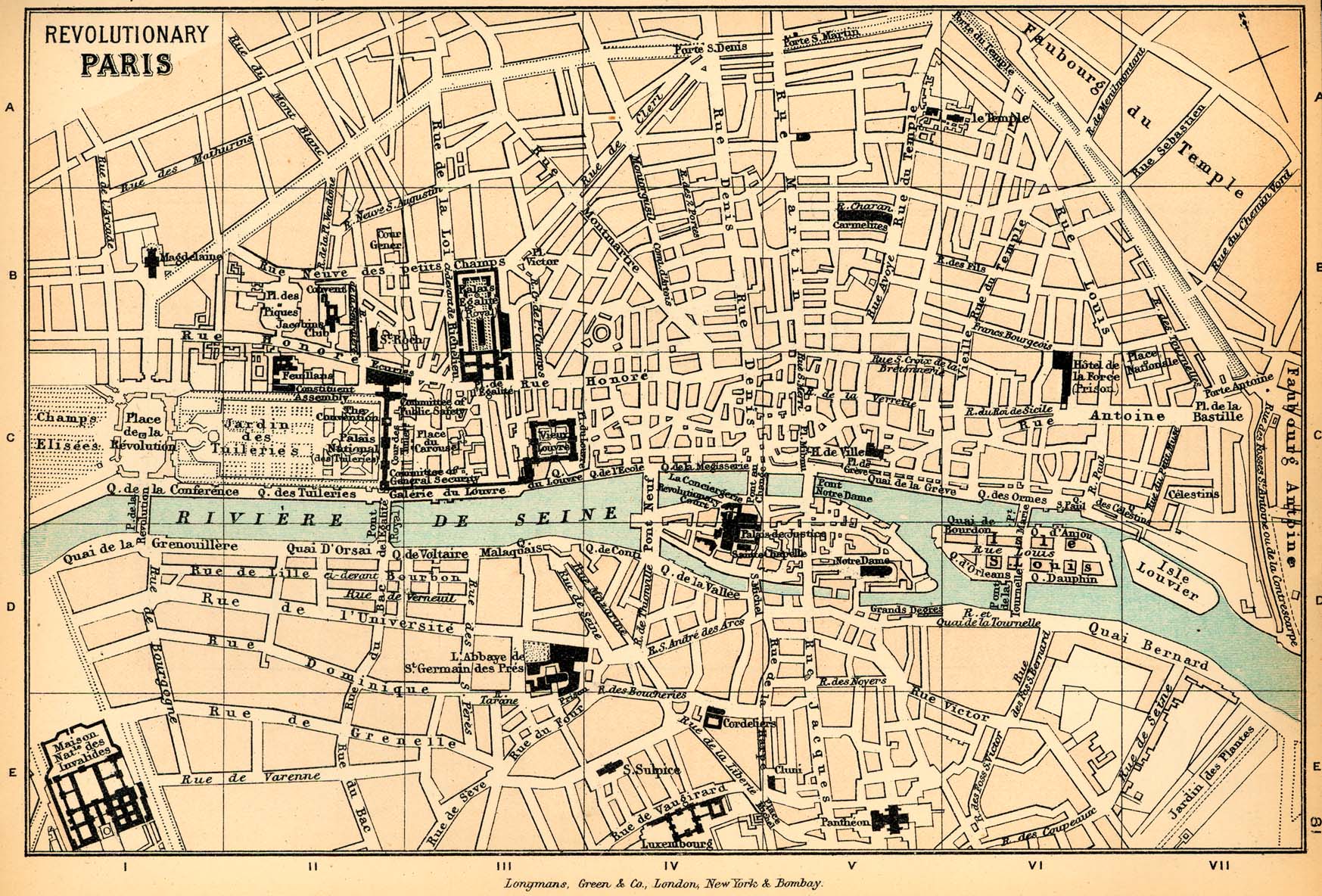
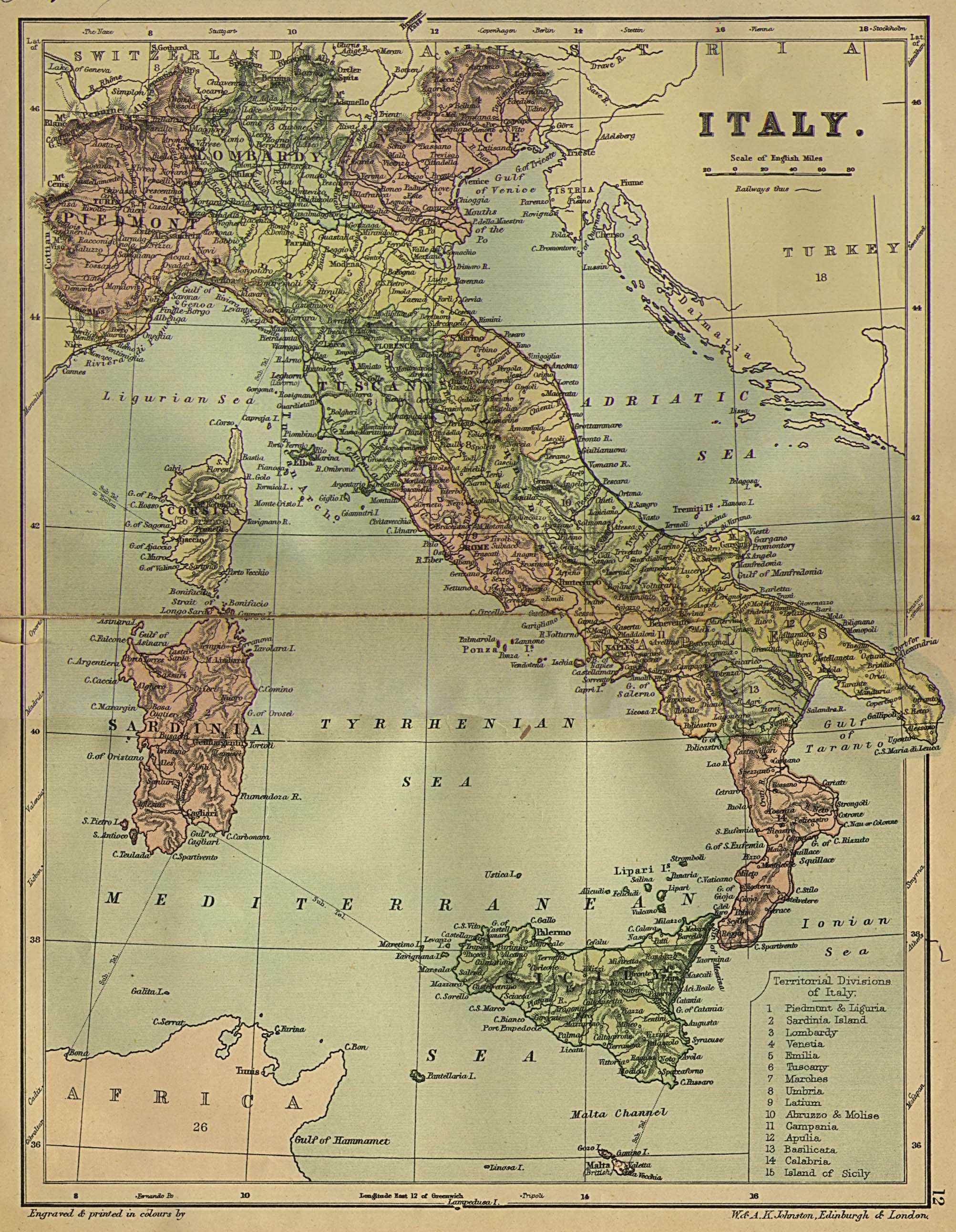
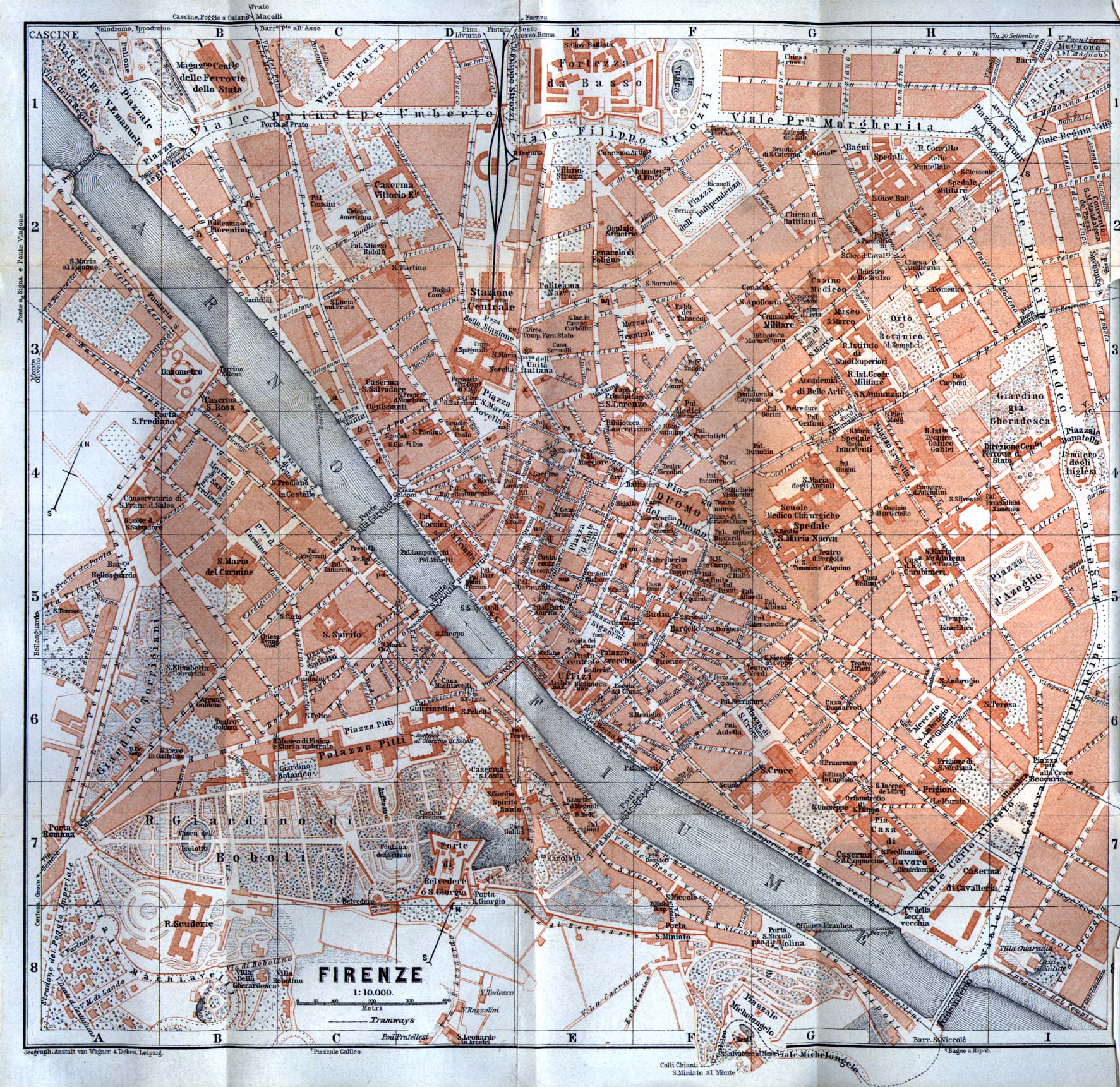
The Perry-Castañeda Library Map Collection is an unusually diverse treasury of maps, arranged geographically and thematically, at The University of Texas at Austin, and access to the collection is remotely available through a website maintained by the University of Texas. We here at The Hawaiian Sybarite are embarrassed to admit how many hours we've spent devouring the Perry-Castañeda collection but like a true addict, we don't want to be alone in our addiction; We would like to turn you on to our cartographic habit.

Sunday, 25 April 2010

Quality of Life Improvement 14: "As Tears Go By"

"As Tears Go By" may have been written by her future boyfriend, Mick Jagger, together with fellow Rolling Stone Keith Richards and her manager, Andrew Loog Oldham, but to us, the song will always belong to Marianne Faithfull.

Marianne Faithfull originally recorded "As Tears Go By" as a B-side in 1964 when she was 17 years old. Decca, her record company, realized that they had a major hit in "As Tears Go By" and switched the it to an A-side, and the track became hugely popular, both in the UK and the US and in so dong, made Marianne Faithfull a huge star.


In the years following "As Tears Go By," Faithfull's formerly angelic persona shifted to one more associated with her fraught and now finished relationship with Mick Jagger, the unborn child that she miscarried, the overdose and resulting coma that nearly killed her, her subsequent sordid and desperate affairs and, especially, her magnetic attraction to drugs.

Faithfull lived in London and on the streets of New York in the late 1970s, addicted to cocaine and heroin, with her career and personal lives in shambles.

The years of drugs and chronic, untreated laryngitis had, as one journalist wrote at the time, "permanently vulgarized her voice." The once-pure, almost fragile, high soprano had cracked and fallen two octaves into that rarest of female vocal quantities—a genuine contralto.

In 1979, still in the depths of opiate addiction, Faithfull released "Broken English." The listening public hadn't heard from Marianne Faithfull in a decade, and when the album started to spin, the voice knocking at their eardrums was dark, deepened, ragged and altogether different than the wistful innocence of Marianne Faithfull, ca. 1964. What's more, the ablum's lyrics stood in extraordinary contrast to that contained in her previous recordings—explicit tales of infidelity, oral sex, terrorism, aging female angst—which scandalized and polarized public opinion.


However, the album was a supreme critical success and is considered one of the greatest of all time, and certainly the greatest of her career; Faithfull herself simply describes it as "the masterpiece."

A version of "As Tears Go By" was recorded for the 1987 album "Strange Weather," and the dissonance between the voice of 1965's Marianne Faithfull and the Marianne Faithfull of 22 years later shifted the tone of the song from cool longing to world-weary wisdom.


Just last year, Faithfull appeared on an installment of the BBC4 Sessions program with the realease of her latest album "Easy Come, Easy Go." For the first time since the 1960s, she sang "As Tears Go By" to it's full, original arrangement.


Marianne Faithfull's albums are available from iTunes, and are available in both mp3 and CD format from amazon.com.

Additional stockists include:

Barnes & Noble Booksellers Ala Moana Mall, 1450 Ala Moana Blvd. Suite 1272, Honolulu Hawaiʻi, (808) 949-7307.

Wednesday, 21 April 2010

Quality of Life Improvement 11: The Wishbone at 60

Hans Jørgen Wegner's Wishbone Chair turns 60 this year and in honor of the occasion, the chair's manufacturer, Carl Hansen & Søn, is issuing a limited-edition production of the Wishbone in twelve different colors over the course of 2010, beginning with the four shades of this spring's blue series. In addition, a selection of textiles has been created in cooperation with Kvadrat, in shades matching the 60th-anniversary Wishbone Chairs, to clad the range of Hans Wegner's upholstered furniture also manufactured by Carl Hansen.


Hans Wegner's Wishbone Chairs in shades of blue ($960) are available from dkVogue, Suite New York, 625 Madison Avenue, Suite 218, New York, New York, USA 10022, (212) 421-3300 and from Coporate Culture Australia, 21-23 Levery Street, 2008 Chippendale, New South Wales, Australia, (02) 9690 0077.

For additional stockists, consult Carl Hansen & Søn.

All images © Carl Hansen & Søn A/S