Monday, 3 May 2010

Quality of Life Improvement 18: The new Hawaiian Airlines long-range fleet


Hawaiian Airlines' first Airbus A330-200 long-range airliner arrived in Honolulu today, and because of Hawaiʻi's dependence on air-travel, we consider this event to be quite important, despite the scant regard the subject receives from the general public and the media.

The wide-body, 294-seat A330 touched down at Honolulu International Airport at 10:49 a.m. after a 7,963 mile delivery flight from the Airbus factory at Toulouse-Blagnac Airport in France via Seattle–Tacoma International Airport.

The Airbus, christened Makaliʻi—the Hawaiian name for the constellation Pleiades, one of the star clusters most important to ancient Polynesian navigators—was welcomed to its new home by hula, lei and a gathering of Hawaiian Airlines employees.

Among the employees assembled on the tarmac was Mark Dunkerley, Hawaiian's president and CEO who said, "What a special moment for all of us at Hawaiian, to see more than three years' planning and coordination come to fruition. This first A330 heralds a new era for Hawaiian, one of growth and new services for our customers." 

The new services of which Mr. Dunkerly speaks include touch-screen entertainment monitors in each seat in all classes which will feature audio- and video-on-demand. As for growth, our informants tell us that routes to the East Coast and Midwest of the United States are currently being considered together with flights to Asia—Seoul and Beijing, in specific, in addition to Hawaiian's already-announced intention to serve Tokyo's Haneda Airport (東京国際空港). We also occasionally hear fantastical stories of Hawaiian Airlines routes to Europe and, as proud as it would make us to see Pualani at Heathrow or Frankfurt or Roissy, we consider it the remotest of possibilities.

We do have concerns, however, about the announced 294 passenger capacity of Hawaiian's A330-200s. A seat map hasn't been released publicly, but such a seating arrangement will make Hawaiian's A330s among the most densely configured in the industry. In comparison, the A330-200s of Air France seat 219 passengers; those of Delta Air Lines, 243; while those of German low-cost carrier, Air Berlin, seat 295 in pinched circumstances. JetStar Airways, the rough and ready younger sibling of Australia's Qantas Airways, manages to shoehorn 303 seats into their A330s. We expect the Hawaiian Airlines Airbuses to have a configuration similar to that of the JetStar aircraft, and we'll reserve judgement until we have concrete information, but if you would like to experience JetStar right now, remember that the airline offers up to five flights weekly from Honolulu to Sydney.

An additional three A330s that are expected to join the Hawaiian Airlines fleet this year, and the airline has signed a purchase agreement with Airbus to acquire seven more A330s from 2011 and six A350XWB-800 (Extra Wide-Body) aircraft starting in 2017, as well as purchase rights for an additional five A330s and six A350s.

Hawaiian's new A330, Makaliʻi, is scheduled to enter commercial service on Friday, June 4, as Flight HA2, departing Honolulu at 1:15 p.m. for Los Angeles. 

Sunday, 2 May 2010

Quality of Life Improvement 17: "Forever Young"


In the 1980s, "Forever Young" never appealed to us much. It was the music that our older relations liked, it was sappy and it was performed by musicians with hair that looked like proof of mental illness to us. By the 1990s, the song was long gone from our memory.

In 2006, an almost unspeakable tragedy occurred in Arctic Norway: our iPod literally froze to death in temperatures that sunk below -20°F and gave up its ghost.


On the long journey back to the Western Hemisphere we were given no choice but to listen to SAS' audio program Pure Vinyl, with ridiculous headphones (we still took them), and that's when we heard "Forever Young" consciously for the first time in 20 years.

Maybe it's aged well since 1984, when Alphaville first recorded it. Or maybe we've aged well, and from our perspective the lyrics actually make some sense, and the hair and haze of Westdeutschen Kitsch in the music video are to us sentimental and comforting now.

Laura Branigan also recorded "Forever Young" in 1985. The album for which it was recorded, "Hold Me," was a commercial failure at the time, but it was in the mid-1980s that Laura Branigan began her tradition of ending every one of her live shows with an encore of "Forever Young."

Interestingly, "Hold Me" has been out of print for many years, despite the fact that it is now considered to be one of the best albums from one of the most underrated stars of the 1980s. The album's cover artwork is unsettling, which only adds to the charm, and we have been led to believe that copies of "Hold Me" regularly sell for hundreds of dollars on eBay.

Laura Branigan will truly be forever young, to us and to everyone—she died unexpectedly of a cerebral aneurysm at her home on Long Island, New York, in 2004.

Saturday, 1 May 2010

Quality of Life Improvement 16: The Perry-Castañeda Library Map Collection


We've always had a predilection for maps—actually, anything to do with our physical existence on this planet. We spent most of our youth lost in a world of airline timetables, route maps, bethymetric charts, architectural design drawings, anatomical drawings and speculative evolutionary diagrams of Hominidae phylogeny based on the interpretation of skeletal remains and the fossil record.

Though it should go without saying, we were hopelessly uncool adolescents.


Our parents encouraged us to broaden our interests and to be like our older siblings, to do the normal things as they did, like surf or play football or have unsafe sex while experimenting with drugs. We answered that we'd be happy to go on a hike to gather wildflowers for use in fragrant potpourris. We'd would have been happy to bake hjertevafler for our Mormon cousins/distant neighbors/father's secretaries. We'd even whip the crème fraîche and carefully gather the fruit to make the preserves that could be enjoyed with the waffles ourselves. If that isn't enough, we could draw a stylish label for the Mason jar of preserves—no, we could design some stylish packaging for every element of a thoughtful gift-basket which you could then give to …


Though we were committed to our awkwardness, there were meagre consolations to our parents in these our "special" talents. By "special," they meant the talents of future homosexualists. If they needed any more evidence, it came in the form of our Christmas wish-list, which every year contained a plea for a subscription to Martha Stewart Living and a Nilfisk or Dyson vacuum.


Our families warmed to our advice about design, laundry and baking, not to mention that we often came in handy by knowing all the lyrics to every song by ABBA, and eventually, even our geography skills gained purchase within our family.


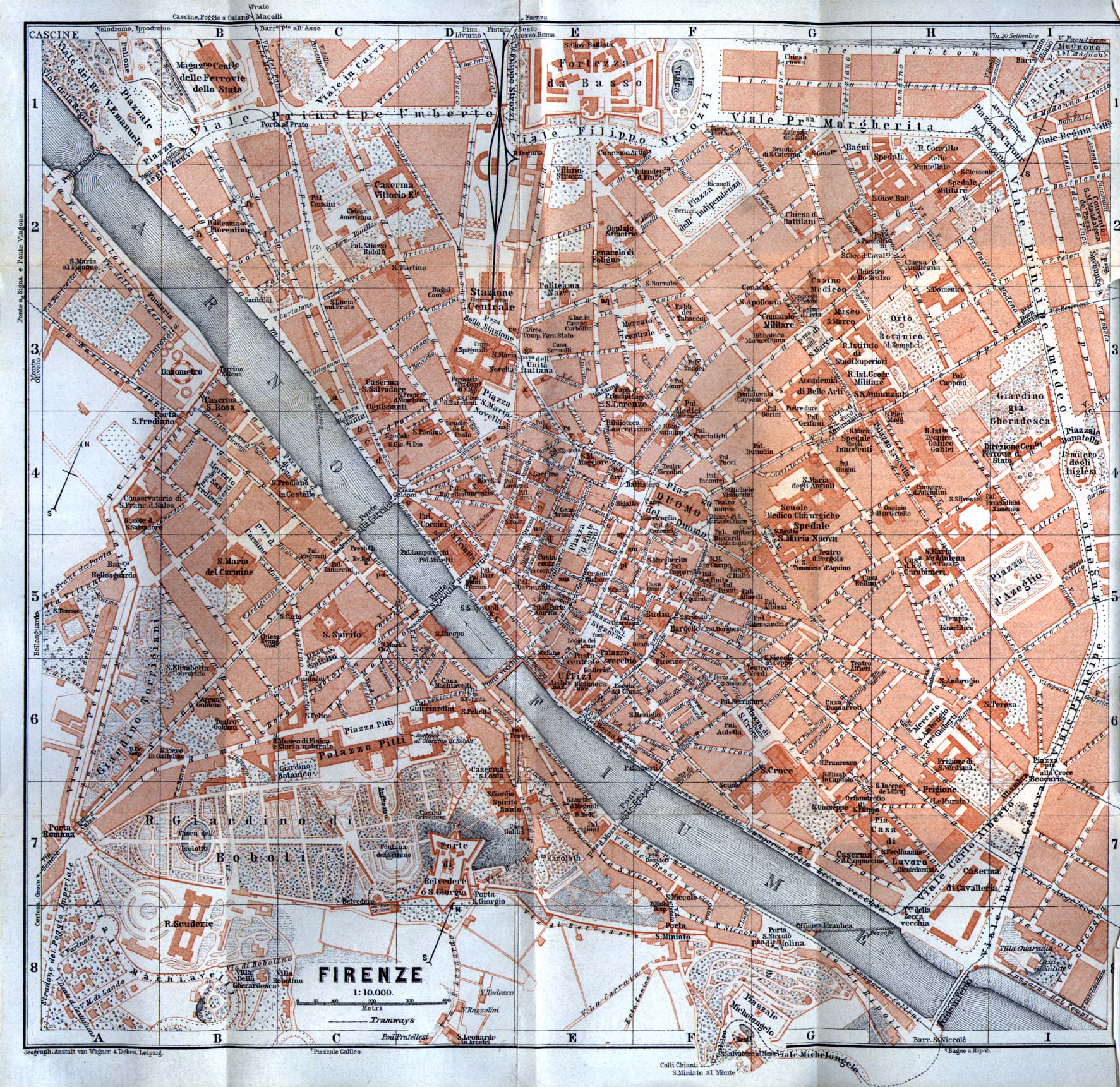
On a family road-trip in Italy that is forever seared in our memory, our father insisted on driving our rented Fiat up a steep, narrow one-way street in the medieval hill town of Montepulciano—the wrong way, against the correct flow of traffic. Then, as cars approached in the intended direction of travel, our father turned off the one-way street, around the next corner, hoping that this time he had found an appropriate thoroughfare. Unfortunately, the thoroughfare was an ancient, wide marble stairway leading precipitously down and out of the inner city. Unsurprisingly, we were reading a volume on Renaissance architecture which contained a selection of maps of Montepulciano. Both the day and the Fiat were saved.


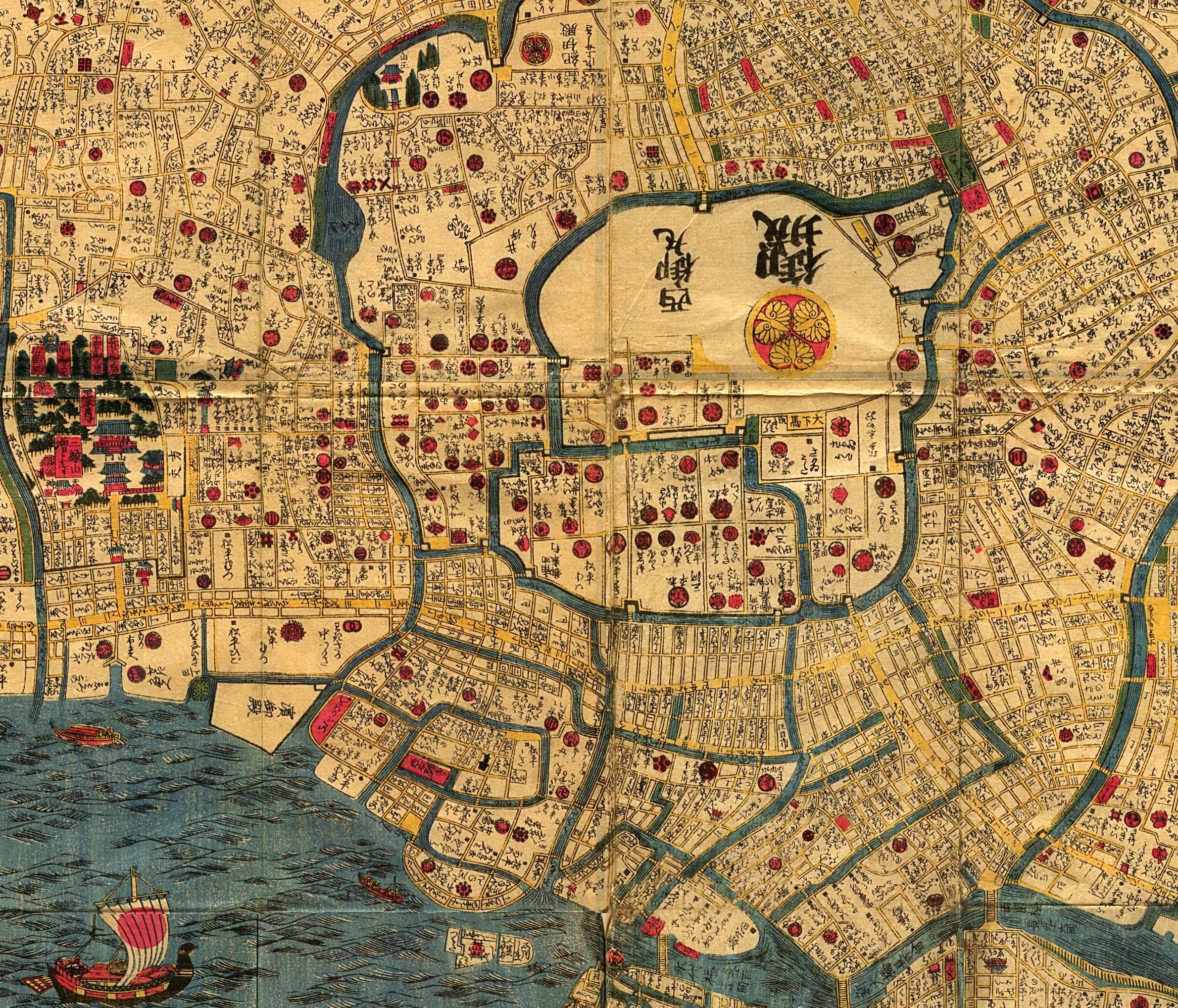
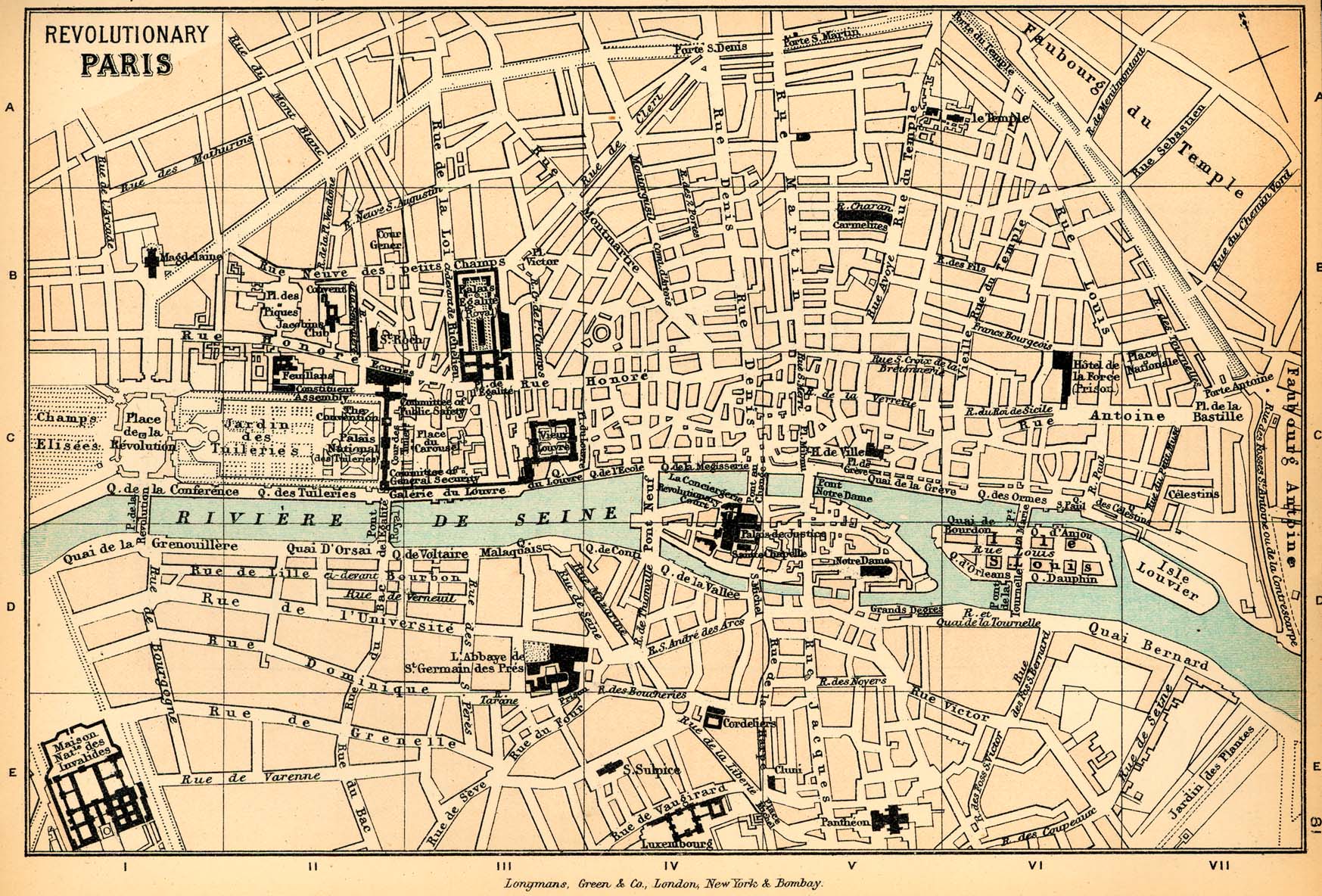
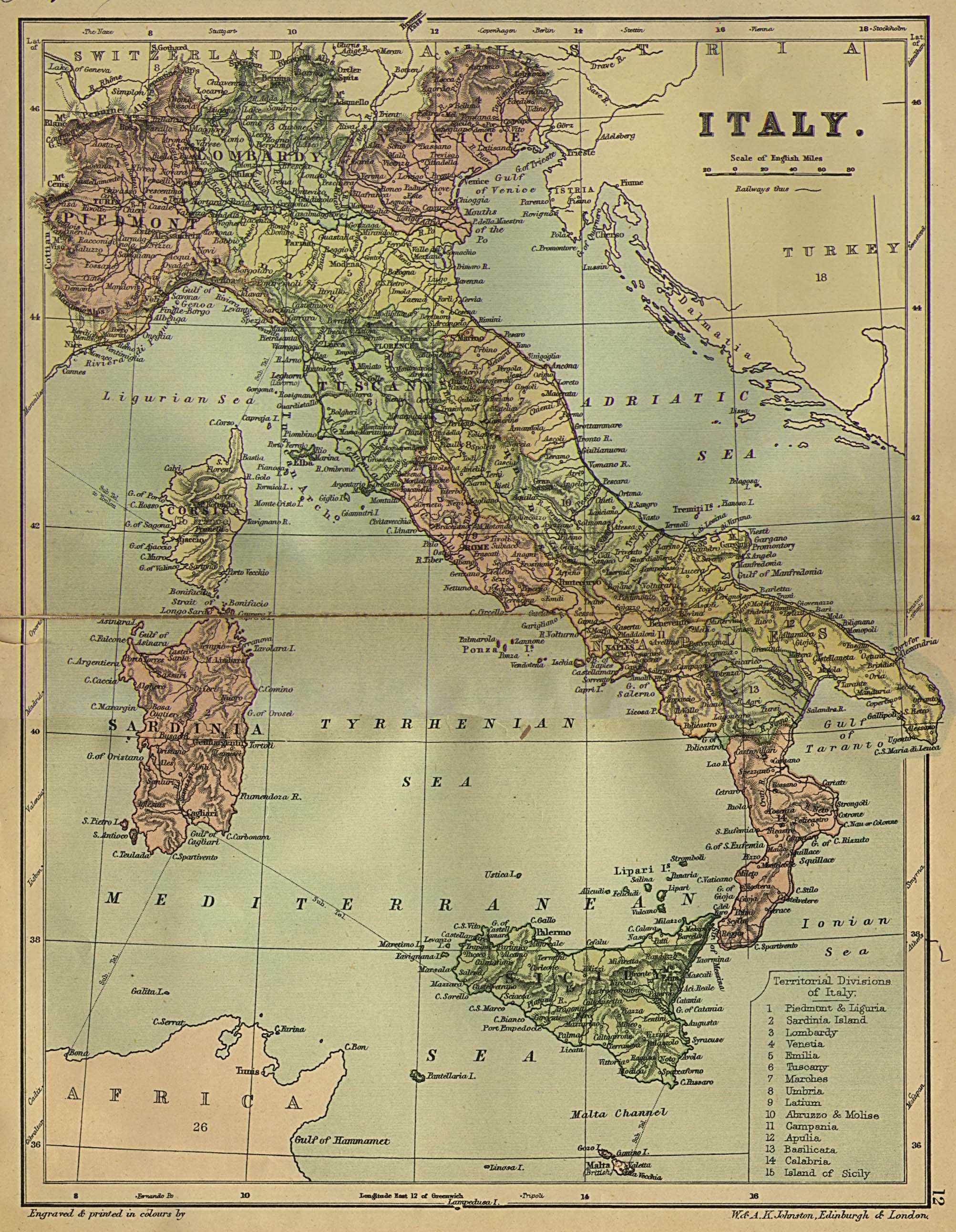
The Perry-Castañeda Library Map Collection is an unusually diverse treasury of maps, arranged geographically and thematically, at The University of Texas at Austin, and access to the collection is remotely available through a website maintained by the University of Texas. We here at The Hawaiian Sybarite are embarrassed to admit how many hours we've spent devouring the Perry-Castañeda collection but like a true addict, we don't want to be alone in our addiction; We would like to turn you on to our cartographic habit.

Thursday, 29 April 2010

Quality of Life Improvement 15: Vivienne Westwood for Cole & Son wallpapers


photo © Daniel Groom

One of The Hawaiian Sybarite's favourite anarchists, Dame Vivienne Westwood, has partered with Cole & Son, royal warrant holder and official purveyor of wallpaper to Her Majesty The Queen, to release a hand-printed collection of wallpapers based on Westwood's textile designs.

In 2000, Vivienne Westwood moved from the council estate in Clapham, London where she had lived for 30 years into a Queen Anne style house built in 1703, which once belonged to the mother of Hawaiʻi's most famous stabbing-victim, Captain James Cook.

Perhaps the blank walls and architectural details of her new home in the Queen Anne style—18th century English Baroque—piqued Westwood's interest in period wallpapers. Whatever the impetus for the collaboration between her and Cole & Son, we like the result.


photo © 2010 Cole & Son (Wallpapers) Ltd. All rights reserved.

"It is good when my ideas get carried over into other artistic media. This collection is a perfect opportunity to be able to work with a heritage company like Cole & Son and to see my ideas from fashion translated into the world of interiors and wallpaper," Westwood told Women's Wear Daily.


photo © 2010 Cole & Son (Wallpapers) Ltd. All rights reserved.
 
The Vivienne Westwood for Cole & Son wallpapers are taken directly from her fashion textiles. An exquisitely detailed trompe-l'oeil tartan print is straight from the designer's iconic plaid runway looks, the "Cut-Out Lace" print is taken from her Spring-Summer 2007 "I am Expensiv" collection, and our favorite wallpaper of the selection,"Squiggle," is based on a pattern that was originally created for the "Pirate" collection of Autumn-Winter 1981.


photo © 2010 Cole & Son (Wallpapers) Ltd. All rights reserved.

Cole & Son have designed and printed wallpaper collections and bespoke designs since 1875, and are the only company in the world to use the original method for hand flocking wallpaper to imitate silk velvet, and are also now one of the last two traditional hand block printers remaining in the world. The company's archive holds approximately 1,800 block print designs, 350 screenprint designs and a huge cache of original drawings and wallpapers representing styles from the 18th century to the present, and a bespoke service is offered for the designs, as well as for custom colorways and hand gilding.


photo © 2010 Cole & Son (Wallpapers) Ltd. All rights reserved.

We appreciate Cole & Son for its elegant use of traditional handcraft while at the same time employing new machine printing technology, advanced papers, metallic links, lustres and foils together with patterns by some of the designers that we like the most, such as Tom Dixon, David Hicks and the iconic Italian artist Piero Fornasetti.

And now, you can add Vivienne Westwood to that list.


photo © 2010 Cole & Son (Wallpapers) Ltd. All rights reserved.

The Vivienne Westwood for Cole & Son wallpapers dont come cheap, with prices ranging from £55 to  £200 (roughly US $80 to $300), but if you are undeterred, the collection is available in North America from Walnut Wallpaper & Trim Shop, 7424 Beverly Boulevard, Los Angeles, California, USA 90036-2725, (323) 932-9166 and from  Lee Jofa, 101 Henry Adams Street, Suite 490, San Francisco, California, USA 94103-5223, (415) 626-6921.

Sunday, 25 April 2010

Quality of Life Improvement 14: "As Tears Go By"

"As Tears Go By" may have been written by her future boyfriend, Mick Jagger, together with fellow Rolling Stone Keith Richards and her manager, Andrew Loog Oldham, but to us, the song will always belong to Marianne Faithfull.

Marianne Faithfull originally recorded "As Tears Go By" as a B-side in 1964 when she was 17 years old. Decca, her record company, realized that they had a major hit in "As Tears Go By" and switched the it to an A-side, and the track became hugely popular, both in the UK and the US and in so dong, made Marianne Faithfull a huge star.


In the years following "As Tears Go By," Faithfull's formerly angelic persona shifted to one more associated with her fraught and now finished relationship with Mick Jagger, the unborn child that she miscarried, the overdose and resulting coma that nearly killed her, her subsequent sordid and desperate affairs and, especially, her magnetic attraction to drugs.

Faithfull lived in London and on the streets of New York in the late 1970s, addicted to cocaine and heroin, with her career and personal lives in shambles.

The years of drugs and chronic, untreated laryngitis had, as one journalist wrote at the time, "permanently vulgarized her voice." The once-pure, almost fragile, high soprano had cracked and fallen two octaves into that rarest of female vocal quantities—a genuine contralto.

In 1979, still in the depths of opiate addiction, Faithfull released "Broken English." The listening public hadn't heard from Marianne Faithfull in a decade, and when the album started to spin, the voice knocking at their eardrums was dark, deepened, ragged and altogether different than the wistful innocence of Marianne Faithfull, ca. 1964. What's more, the ablum's lyrics stood in extraordinary contrast to that contained in her previous recordings—explicit tales of infidelity, oral sex, terrorism, aging female angst—which scandalized and polarized public opinion.


However, the album was a supreme critical success and is considered one of the greatest of all time, and certainly the greatest of her career; Faithfull herself simply describes it as "the masterpiece."

A version of "As Tears Go By" was recorded for the 1987 album "Strange Weather," and the dissonance between the voice of 1965's Marianne Faithfull and the Marianne Faithfull of 22 years later shifted the tone of the song from cool longing to world-weary wisdom.


Just last year, Faithfull appeared on an installment of the BBC4 Sessions program with the realease of her latest album "Easy Come, Easy Go." For the first time since the 1960s, she sang "As Tears Go By" to it's full, original arrangement.


Marianne Faithfull's albums are available from iTunes, and are available in both mp3 and CD format from amazon.com.

Additional stockists include:

Barnes & Noble Booksellers Ala Moana Mall, 1450 Ala Moana Blvd. Suite 1272, Honolulu Hawaiʻi, (808) 949-7307.

Thursday, 22 April 2010

Quality of Life Improvement 12: Air New Zealand's Skycouch


"Eh-crayft … eh-crayft … not set-ees-fyyed … eh-crayft," were the words coming from Eh No Zillun's (that's probably Air New Zealand, to you) chief executive officer Rob Fyfe during a recent press conference in Auckland, and it appeared that communication was taking place in the room, but we weren't part of it. The language may well have been isiXhosa.  

Oh! Aircraft! Not satisfied! Not satisfied with what Boeing had on offer for Air New Zealand's soon-to-be-delivered 777-300ERs! We finally understood.


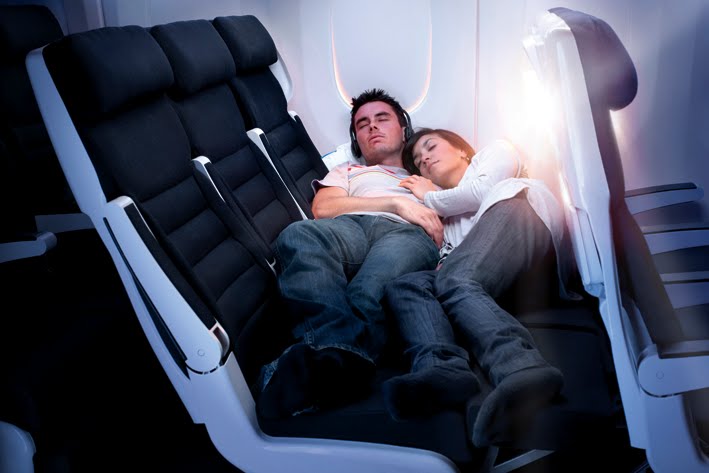
Not being satisfied with the prêt-à-porter seating offerings from Boeing and its suppliers, Air New Zealand developed a bespoke Economy Class seat and with it, the Economy Class Skycouch.


"The seats themselves are our Economy seats with armrests that disappear into the back of the seat. There’s also a cup holder, a trinket tray, a winged headrest and a sleep pillow on every seat. What makes the Skycouch different to other Economy seats is the way the trio of seats transform," Air New Zealand's website explains.


"With a touch of a button, a footrest will come out from under each of the three seats which you can pull up to create a flat, flexible space for you to use however you like."


“For those who choose, the days of sitting in economy and yearning to lie down and sleep are gone,’’ Fyfe said in a statement. “The dream is now a reality, one that you can even share with a travelling companion—just keep your clothes on.”

Air New Zealand recognized that its customers are largely leisure travelers, often on overnight long-hauls, so creating an onboard environment conducive to sleep became their highest inflight service priority. Three years on, horizontal seating hardware—to now a bragging right reserved for the plutocracy—in all three service classes has been the result of their toil.

Business Premier, Air New Zealand's business class, remains largely unchanged through the airline's service upgrades and will continue to employ the same swish seat developed and licensed by Virgin Atlantic that converts to a 6' 7.5" bed.


In its updated Premium Economy Class, a class somewhere between YMCA and country club, passengers will enjoy seats and services approaching the standards of the last decade's business classes. Arranged in pairs, the middle column of seats swivel towards one another and a shared dining table/expansive armrest. And while Premium Economy doesn't feature leg-rests, it does feature a charming beanbag chap named Otto who "would like to be an ottoman but [he] isn't quite." Otto and his clones will not even take to the air in earnest for another eight months, but Air New Zealand is already correctly conceding that they "anticipate that these will get stolen in huge numbers."

From December, 22 sets of the Skycouch will be available on Air New Zealand's flights between Auckland and Los Angeles. In 2011, Air New Zealand will introduce its new service concept in all classes on flights to London, whereafter the improvements will be introduced throughout the existing long-haul fleet, making it available to all of the airline’s Asian, North American and United Kingdom destinations by 2012.

Those that are acquainted with The Hawaiian Sybarite will be aware that we find Aotearoa continuously admirable. We find its candid-yet-intelligent informality refreshing, we find its egalitarianism and humanism reassuring and so we find it no coincidence that the first major innovation in economy class hardware since its invention is brought to us courtesy of New Zealand.


Exact pricing for the Skycouch has yet to be announced, but its intended demographics are families traveling with young children, who will be able to stretch out across the trio of seats that comprise each Skycouch, and couples who will purchase their own two seats and also the middle seat at a discount to occupy what Air New Zealand rather grostesquely refers to as its "Cuddle Class."


New Zealand's characteristic humanism was expressed by Air New Zealand's Rob Fyfe, when he identified "the pivotal point that took [Air New Zealand] in a different direction" as "the decision to be about flying people and not about flying planes."

A revolutionary concept, to judge his philosophy against the actions of his airline's competitors. Flying with an Asian airline can be pleasant enough if the social costs of Singapore Girl are ignored, and flying within Europe is often not altogether tortuous, but flying in North America is reminiscent of the worst days of Stalinism.

As for the state of aviation in our archipelagic kingdom, we at The Hawaiian Sybarite thank Mark Dunkerly for raising Hawaiian Airlines up from its bad old days to the solidly acceptable airline that it has become.

It is our advice to airline executives in Tokyo, Beijing, Seattle, Chicago, Fort Worth, Atlanta, Montréal, Copenhagen and Stockholm, Amsterdam, Frankfurt and Madrid to visit Auckland and Air New Zealand, immediately, with a pen in your pocket, your company's checkbook in your attaché and your hat in your hands. Ask thoughtful questions, take fastidious notes, and then beg Air New Zealand to license their interior hardware to your airline.

Finally, to the aforementioned list of executives one is missing and must be added—that's you, Mr. Dunkerly. We offer our sincere thanks, but praise such as "acceptable" and "better" and "not as bad as it used to be" simply isn't good enough for us. You've done well, but you've got a long way to go—3814nm to be precise.


Air New Zealand is our preferred transport to New Zealand, Australia and other points in the South Pacific. Air New Zealand now flies from Honolulu to Auckland every Wednesday and Friday evening, with Monday departures added during the airline's summer timetable. Flights to Honolulu depart Auckland on Thursday and Saturday mornings, with additional Tuesday departures this summer.

All images © Air New Zealand Limited 

Wednesday, 21 April 2010

Quality of Life Improvement 11: The Wishbone at 60

Hans Jørgen Wegner's Wishbone Chair turns 60 this year and in honor of the occasion, the chair's manufacturer, Carl Hansen & Søn, is issuing a limited-edition production of the Wishbone in twelve different colors over the course of 2010, beginning with the four shades of this spring's blue series. In addition, a selection of textiles has been created in cooperation with Kvadrat, in shades matching the 60th-anniversary Wishbone Chairs, to clad the range of Hans Wegner's upholstered furniture also manufactured by Carl Hansen.


Hans Wegner's Wishbone Chairs in shades of blue ($960) are available from dkVogue, Suite New York, 625 Madison Avenue, Suite 218, New York, New York, USA 10022, (212) 421-3300 and from Coporate Culture Australia, 21-23 Levery Street, 2008 Chippendale, New South Wales, Australia, (02) 9690 0077.

For additional stockists, consult Carl Hansen & Søn.

All images © Carl Hansen & Søn A/S

Quality of Life Improvement 10: Mankiller


Wilma Mankiller, Asgaya-dihi in Cherokee, died on April 6. She was 64.

Mankiller's life-story is worthy of a book and, thankfully, she wrote one.

The sixth of eleven children, she was born on the Cherokee reservation in rural Oklahoma but her family was moved to San Francisco's Tenderloin in 1942 by the Bureau of Indian Affairs' Indian Relocation Program, despite the fact that no one in the family had the remotest conception of a "city." At 17 she married an Ecuadorian college student, had two daughters and later graduated from San Francisco State University, notably participating in the Occupation of Alcatraz Island in 1969.

in 1977 she divorced and returned to Oklahoma and to the Cherokee Nation. Two years later, Mankiller was gravely injured in a head-on automobile collision, and she continued to suffer from a multitude of other ailments throughout the remainder of her life including myasthenia gravis, a kidney transplant, breast cancer, lymphoma and pancreatic cancer.

Storied preamble notwithstanding, the singular characteristic that made Wilma Mankiller "one of the most influential Native Americans in America" was the power of her conviction to rewrite her own constitution—in the process becoming the Cherokee Nation's first female principal chief.

During her tenure as chief she saw the population of the Cherokee Nation grow from 55,000 to 156,000, raised $20 million for infrastructure projects on the Cherokee Reservation and also attempted to reunite the Cherokee of Oklahoma with the Eastern Cherokee of North Carolina. Mankiller was awarded the US Presidential Medal of Freedom, the Elizabeth Blackwell Award, the John W. Gardner Leadership Award and was inducted into the National Women's Hall of Fame in 1993, as well as the Oklahoma Women's Hall of Fame. In an intriguing side-note, in 1994 Mankiller and the singer Patsy Cline were among the inductees into the National Cowgirl Museum and Hall of Fame.

An accomplished and best-selling author, Mankiller published two books: "Mankiller: A Chief and Her People" and "Every Day Is a Good Day: Reflections by Contemporary Indigenous Women."

Gloria Steinem said in a review of "Mankiller: A Chief and Her People" that "As one woman's journey, Mankiller opens the heart. As the history of a people, it informs the mind. Together, it teaches us that, as long as people like Wilma Mankiller carry the flame within them, centuries of ignorance and genocide can't extinguish the human spirit."

Wilma Mankiller humbly explained her seemingly supernatural imperturbability by a complete absence of fear of death that came from her many encounters with her own mortality.

In the month before her death, she issued a statment explaining to her family and friends that she was "mentally and spiritually prepared for this journey; a journey that all human beings will take at one time or another. I learned a long time ago that I can't control the challenges the Creator sends my way but I can control the way I think about them and deal with them."

"On balance, I have been blessed with an extraordinarily rich and wonderful life, filled with incredible experiences. And I am grateful to have a support team composed of loving family and friends," Mankiller continued. "It's been my privilege to meet and be touched by thousands of people in my life and I regret not being able to deliver this message personally to so many of you."

Quality of Life Improvement 9: David Hicks


There's a special place in our hearts at The Hawaiian Sybarite for designer David Hicks, and we would like to think of him as a kindred spirit. The New York Times obituary for Hicks remarks that he was "[k]nown for his love of graphic color combinations as well as for a temperament that veered between disarming charm and apoplectic rage." We can only dream of having such praise lavished upon us after we've died.

Written by his son Ashley Hicks, "David Hicks: a life of design" is a richly-illustrated survey of the designer's career. Ashley Hicks has had unprecedented access to Hicks’ archives, personal photos, journals, and scrapbooks, and he has produced a monograph that leaves the reader with an understanding of the atmospheric, regal oases that Hicks spent his life working to create.


''My greatest contribution as an interior designer has been to show people how to use bold color mixtures, how to use patterned carpets, how to light rooms and how to mix old with new,'' Hicks himself wrote in his 1968 volume "David Hicks on Living—with Taste." His interiors were highly controlled and carefully considered, though Hicks was no minimalist. He stood outside of identifiable design-idioms and created the jet-set chic of the 1960s, with a clientele to match.

His interiors juxtaposed neoclassical antiques with Modernist furniture, Georgian and Victorian architecture with modern, geometric prints, all in a riotous color palette that often included shades that ranged from purple, maroon, crimson, magenta to the brightest pink. According to his wife, Lady Pamela Hicks, a glossy brown paint was eventually added to his palette after she began throwing glasses of Coca-Cola at him during moments of marital discord.

Hicks' outsized personality often overshadowed even his boldest work.

''He was an absolute volcano to live with, but so life enhancing,'' Lady Pamela said. ''I already miss his slamming of doors. David filled your sails with his enthusiasms. When I met him, I was visually blind, always with my nose in a book. He opened my eyes.''

His tantrums, his pedanticism, his domineering, his perfectionism, his his brilliant creativity, his love of grand gestures and passionate scenes and the operas of Richard Wagner—his affection for playing Wagner at ear-piercing volumes is legendary—none of these traits could have been excised.

Even after death, Hicks continued to exert his formidable power. He left epic instructions about for the disposition of his body in a document titled "The Demise of David Hicks." Among other final requests, the hearse was to be "a trailer pulled behind a Range Rover festooned with ivy," the funeral was to be held on Saturday at a 15th-century church near his home and his coffin was to be filled with his obituaries and press-notices.

David Hicks' confident refusal to follow anything but his own intuition created a style that often seems avant-garde today. He is remembered fondly by his design descendants, notably Kelly Werstler and Jonathan Adler, who draw on all periods, past and future, appreciate all design philosophies and use who don't hesitate to use all colors, just as David Hicks did generations earlier.

Hicks' detractors remind us that the patterned carpet lining the halls of the Overlook Hotel in Stanley Kubrick's "The Shining" is, in fact, Hicks' most famous pattern, "Hicks' Hexagon", and his connection with the dark, satanic energy that consumes Jack Torrance in the film is no coincidence. These same committed un-funsters often remind us also of Hicks' famous idolization of Richard Wagner and his famous love of Wagner's music, in specific his love of Wagner's marathon, six-hour apocalyptic opera Götterdämmerung. A person who likes Wagner is already suspected of being a dangerous sociopath, so their logic goes, and actually enjoying his operas, Götterdämmerung no less, simply proves the case that he was a talentless, degenerate pervert.


Maybe we shouldn't tell you this, but Götterdämmerung is our favorite opera, too.


"David Hicks: a life of design" from Rizzoli is available on Amazon.com and is available locally at Barnes & Noble Booksellers Ala Moana Mall, 1450 Ala Moana Blvd. Suite 1272, Honolulu Hawaiʻi, (808) 949-7307

Tuesday, 20 April 2010

Quality of Life Improvement 8: Hitachino Nest Beer


Arne Jacobsen, architect and one of the godfathers of Danish-Modernism, was asked about the formation of his philosophy of æsthetics.

"A pastry usually tastes better if it looks nice," he said. "A cream pastry, now that looks nice—in fact, there is nothing I mind as long as it looks nice."

We at The Hawaiian Sybarite live by these sage words, and we fall hard for beautifully-designed packaging. Rarely is it that we see packaging as nice looking as the Hitachino Nest line of beers. We were entirely ready to enjoy Hitachino Nest solely for the novelty of its packaging, but were surprised by the quality of its contents. This is excellent beer.


Kiuchi Brewery (木内酒造) of Naka, Japan, began brewing Hitachino Nest Beer in 1996. Kiuchi's history stretches back to 1823, when the company was founded to produce sake and shōchū (焼酎). In the 1990s, Kiuchi struck upon the rather clever idea of using the techniques and implements—and even ingredients—for the manufacture of sake and shōchū in the brewing of beer, thus hatching Hitachino Nest Beer.

The Hitachino Nest Beers are top-fermented ales and, at the time of writing, are brewed in no less than 13 varieties: Amber Ale, Espresso Stout, Ginger Ale (and another version that Kiuchi curiously refers to as "Real Ginger Ale"), Japanese Classic Ale, New Year Celebration Ale, Pale Ale, Red Rice Ale, Sweet Stout, Weizen, White Ale, and XH, a Belgian Strong Ale that matures for three months in shōchū casks.

Hitachino Nest's White Ale is a Belgian-style witbier, surprisingly creamy and deeply spicy. Kiuchi has strongly-spiced theier White Ale with clove and coriander, and, in the tradition of Belgian witibers, there are strong suggestions of citrus. The clove lingers after you've enjoyed the last of this beer, and there's little sweetness to it, which makes it an ideal pairing with Japanese food.

New Year Celebration Ale seems to us at The Hawaiian Sybarite to be an obvious descendant of the Scandinavian breweries' tradition of releasing special Christmas- and New Year's-beers. Like its Nordic antecedents, Hitachino Nest's Celebration Ale is sweeter and spicier than traditional beers, with aromas originally drawn from Gløgg, the season's mulled red wine.

Kiuchi's Celebration Ale has all the requisite ingredients in well-crafted harmony: cinnamon, citrus, plenty of coriander, nutmeg and vanilla. The ale itself is eminently enjoyable, but we encourage you to take note of the bottle and its labeling; we think that it's the most arresting packaging we've encountered, with a representation of Fuji-san reminiscent of Hokusai and our favorite owl friend front-and-center flying dangerously close to cute overload territory but ultimately winging away from the precipice.

The Red Rice Ale pours guava-hued with a head both tinted and scented strawberry, courtesy of this beer's eponymous ingredient. It is surprisingly sweet and also surprisingly sake-like, owing its fermentation by sake-yeast and its 7% alcohol-by-volume content—give us the keys to your car now and let Kiuchi Brewery—their owl—take you on a journey.

The Hitachino Nest Red Rice Ale is rumored to be the last Red Rice beer in the world, and if you like your beer boozy, exotic, fruity, malty and subtly-complex, drink up. After all, the owl always was the wisest of all birds.


Hitachino Nest Beers are available at Whole Foods Market, 4211 Waialae Avenue, Honolulu Hawai‘i, 96816-5340, (808) 738-0820.

For additional stockists, consult Kiuchi Brewery or, in the United States, B. United International Inc.

Sunday, 18 April 2010

Quality of Life Improvement 7: the Non Random Light from Moooi

 
© Moooi B.V.

Moooi, the Dutch design house founded by industrial designer Marcel Wanders, can rightfully claim to have created one of the 21st century's first design classics in 2001 with Bertjan Pot's Random Light.

Pot's bird's-nest-like globe of spun fiberglass soaked in epoxy resin was originally constructed by hand, but demand eventually became such that a switch to mechanized production was necessary.

It should have been obvious at the time, but machines have a difficult task in manufacturing truly random structures. The paradigm of enforced uniformity and precision inherent in mass-manufactuing inspired the Random Light's designer Bertjan Pot to create a design tangential to the Random Light, one that capitalized on uniformity and precision.

The result is the appropriately-named Non Random Light.

 
© Moooi B.V. 

While crafted from the same materials as its "random" sibling—fiberglass and epoxy resin—the Non Random Light gives an altogether different quality of light. The Random Light gives an omni-directional light, but in the Non Random Light, the bulb is carefully concealed by the light's reflector, which concentrates most of the light downwards. As light passes through the strands of fiberglass it illuminates the entire nest of the structure and, through a shoji-like effect, allows flattering light to softly fill its intended space.

© Bertjan Pot


The Non Random Light from Moooi is available at Cliq Lighting Gallery at Honolulu Design Center, 1250 Kapiolani Boulevard, Honolulu Hawaiʻi 96814-2803, (808) 956-1250.